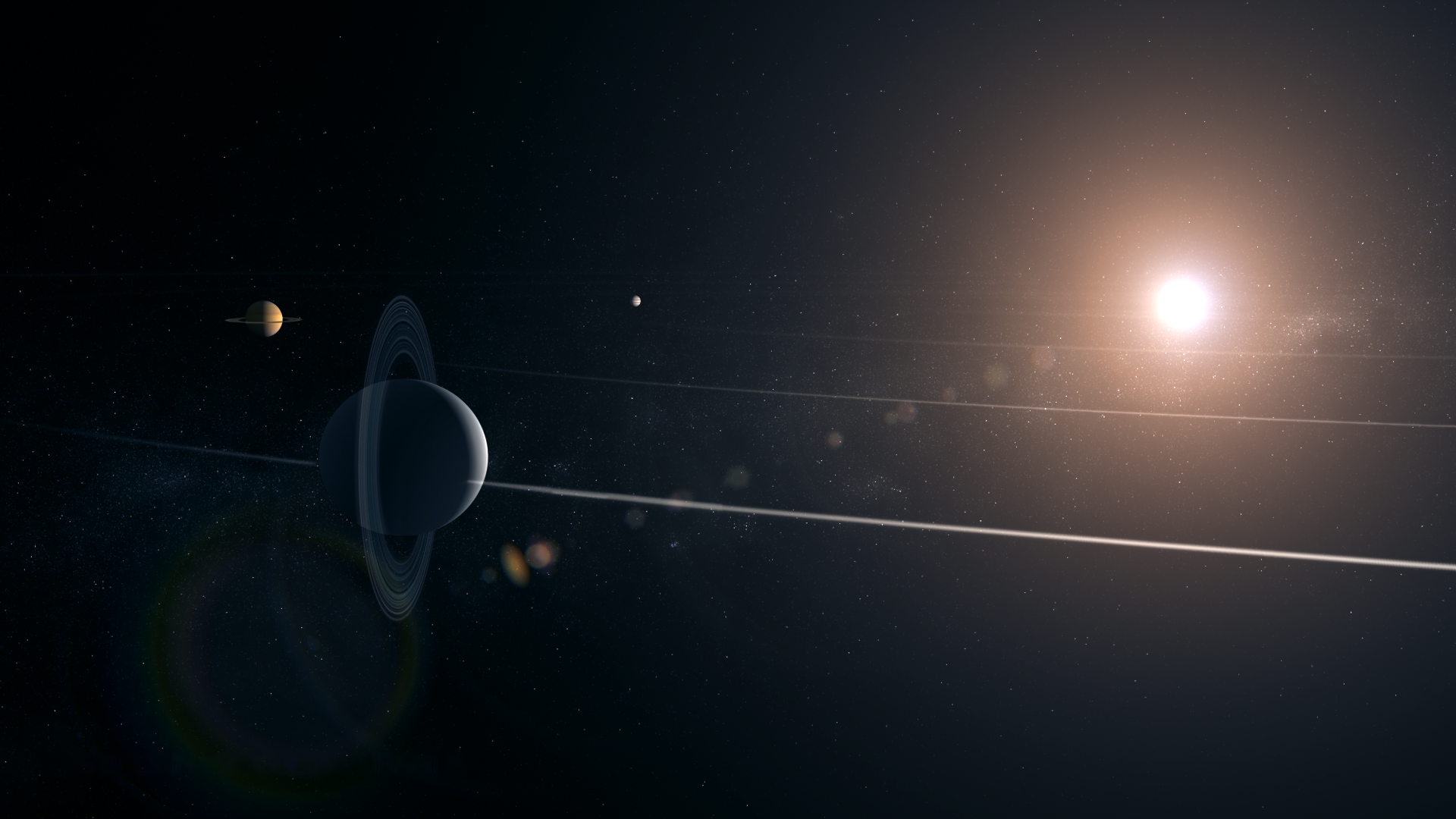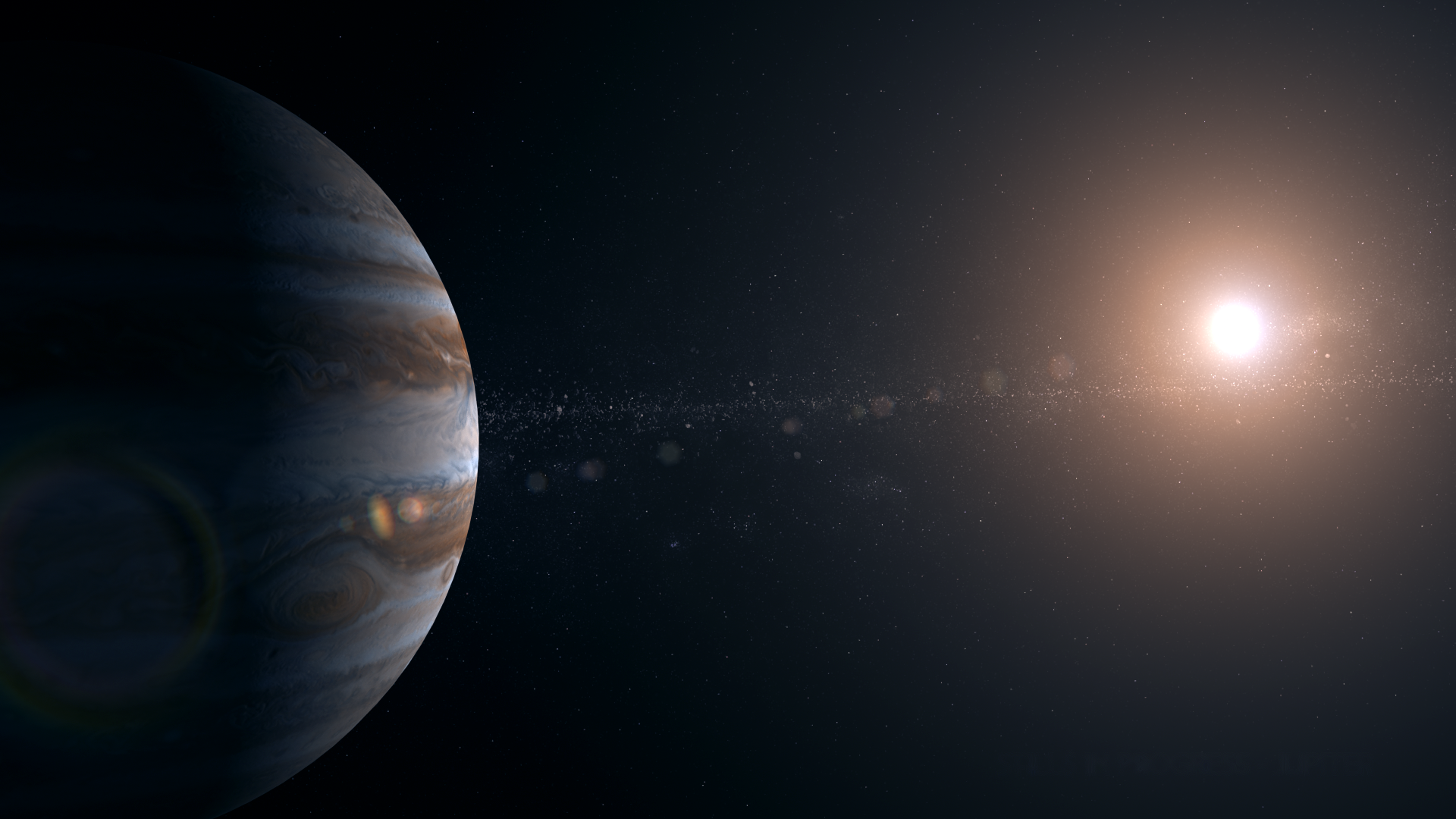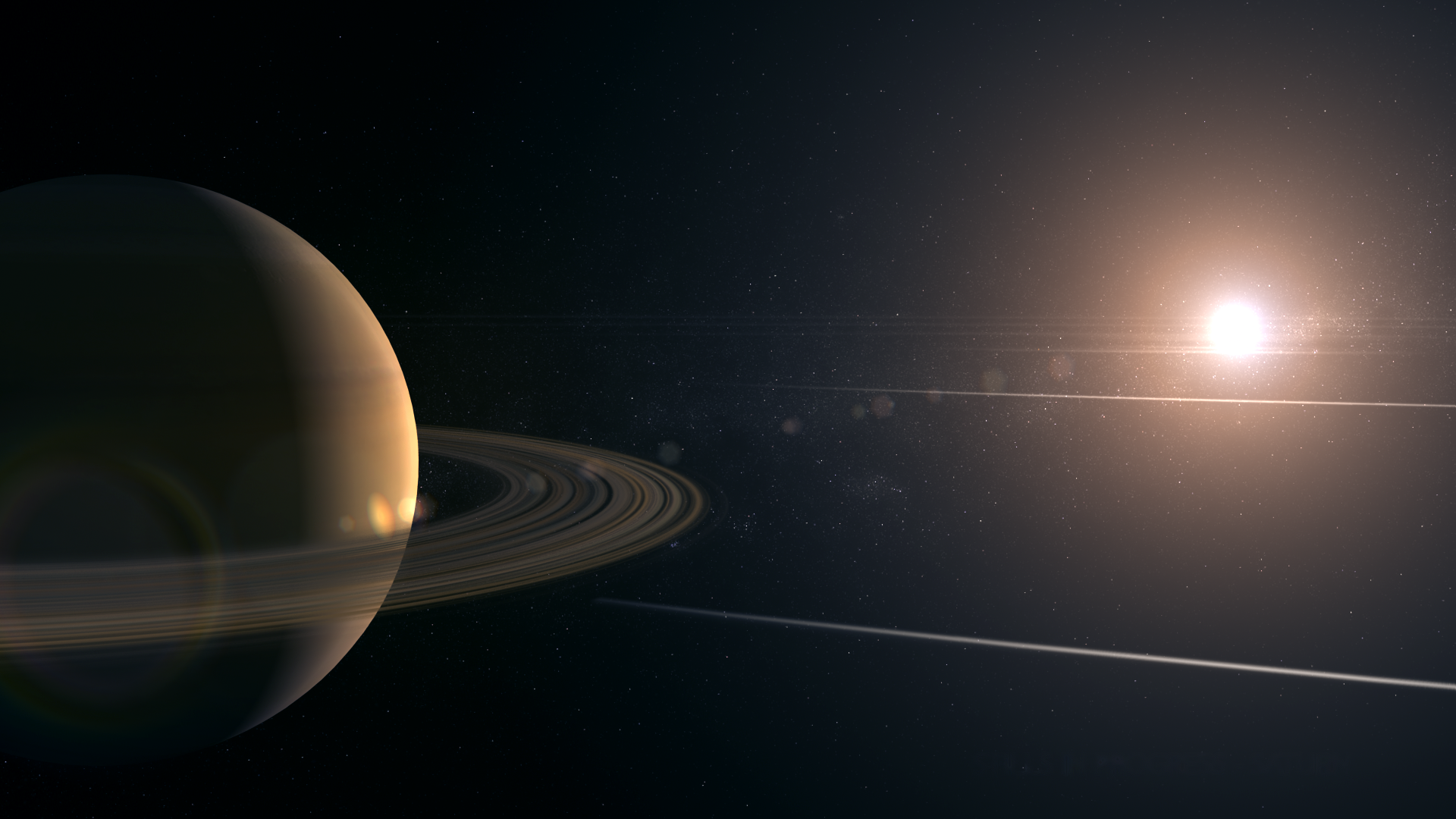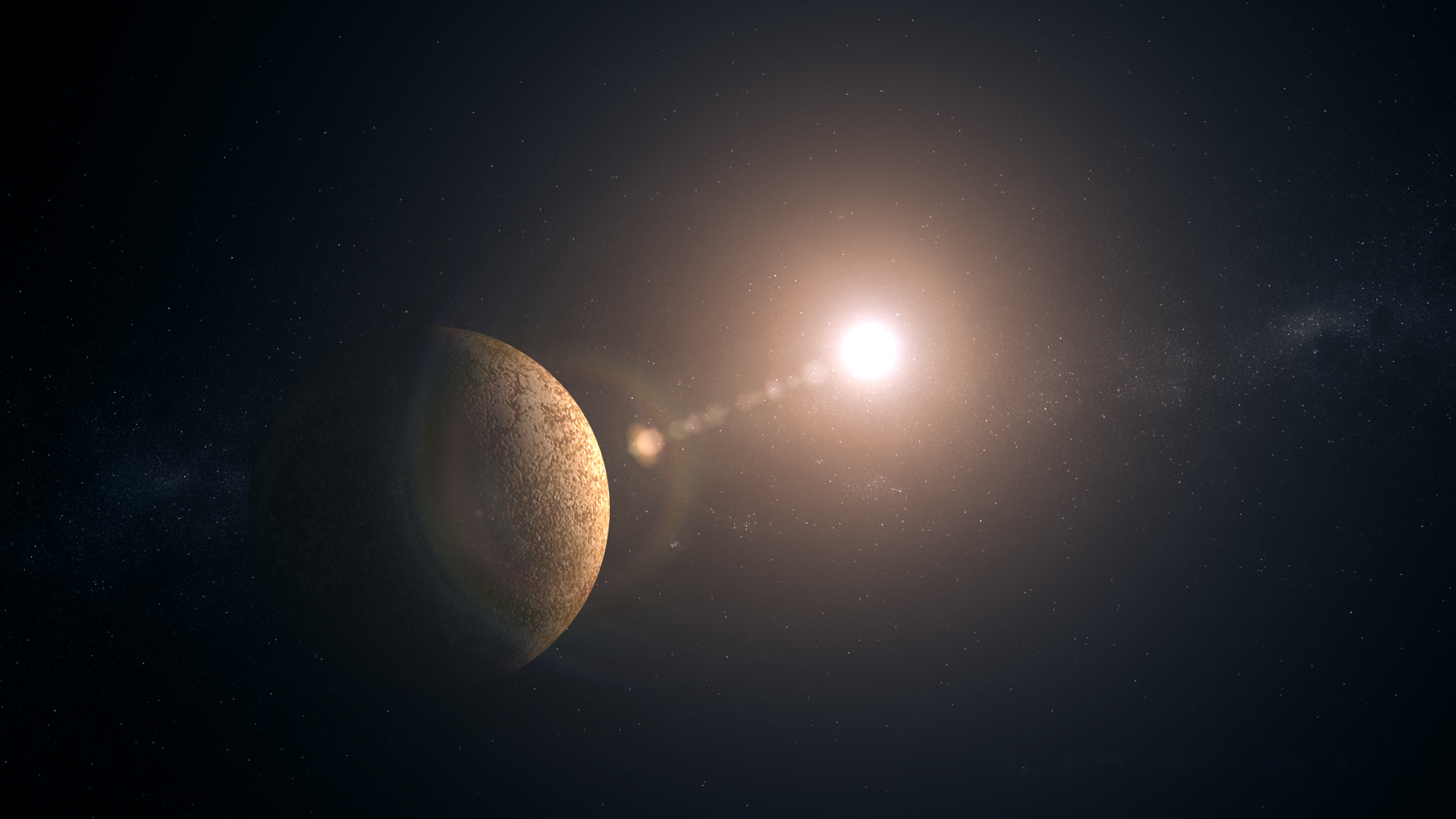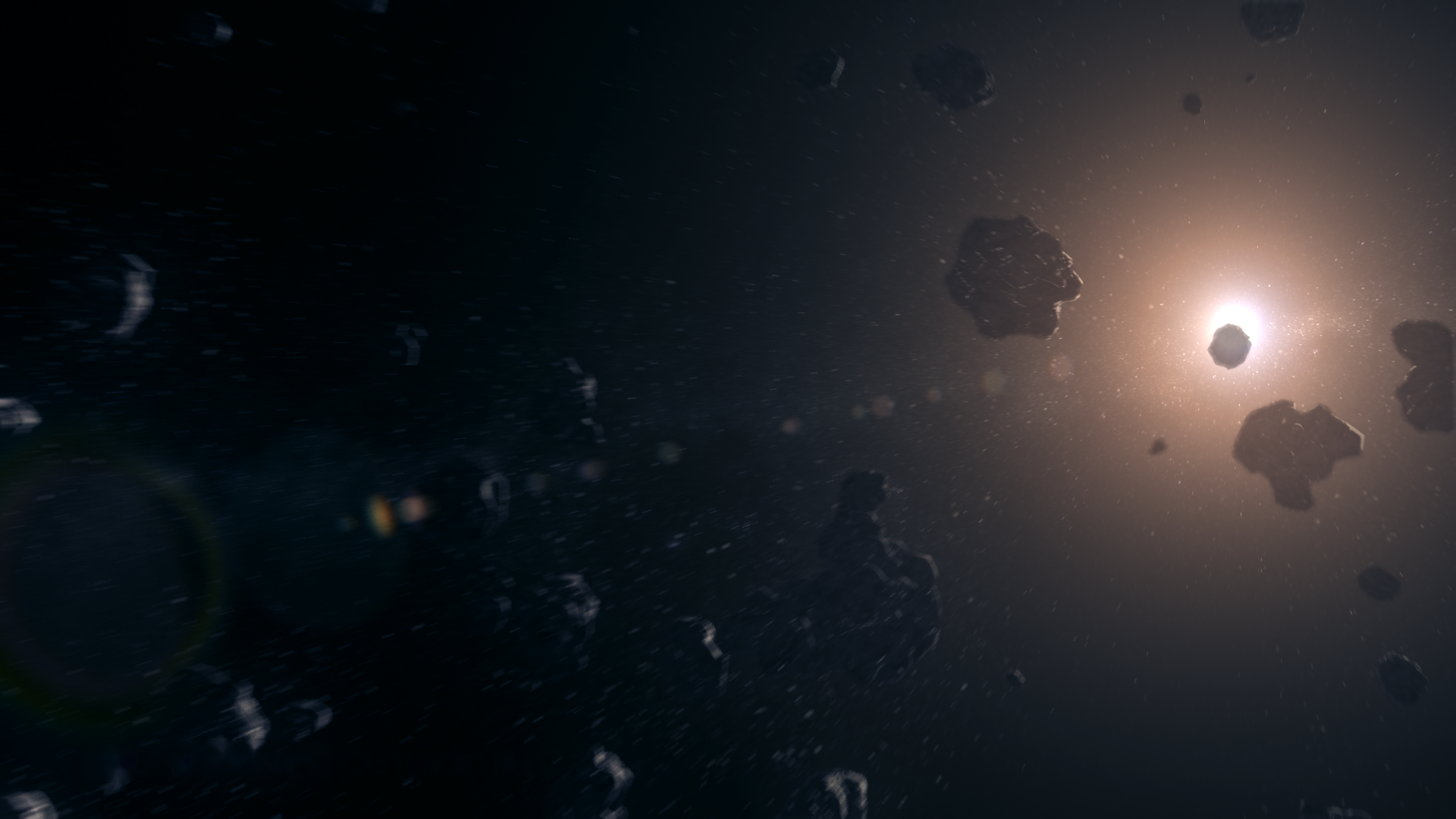

The Year of Pluto is a NASA documentary from writer/director/producer Geoff Haines-Stiles (of Carl Sagan’s Cosmos), filmed behind the scenes at the Johns Hopkins Applied Physics Lab and elsewhere over a decade-plus span. It turns hard science into personal stories and follows NASA’s New Horizons craft, which returned stunning close-up images of dwarf planet Pluto and its largest moon, Charon. At Pixeldust Studios, I supervised the CG for the nearly six-minute Kuiper Belt sequence, working one-on-one with Geoff Haines-Stiles throughout.
The core challenge was one of scale and form: digitally recreating the Kuiper Belt and the Oort Cloud — two of the outer solar system’s most distant regions, filled with hundreds of thousands of icy bodies, more than 4,000 dwarf planets, and trillions of comets — in true volumetric form and faithful to real science. We grounded the recreation in real astronomical data: Tony Dunn’s Gravity Simulator point-cloud data from the Harvard-Smithsonian Minor Planet Center, together with vector images, which anchored the structure and placement of the objects across both regions.
(Read More below and look for official show links).
SAMAR SHOOL Responsibilities
Supervised the CG for the nearly six-minute Kuiper Belt sequence in NASA’s documentary The Year of Pluto, tied to the New Horizons flyby of Pluto and its moon Charon.
Led the volumetric recreation of the Kuiper Belt and the Oort Cloud from real astronomical data — Tony Dunn’s Gravity Simulator point-cloud data from the Harvard-Smithsonian Minor Planet Center, plus vector images — deploying nParticle systems in Autodesk Maya to hold large volumes of point clouds.
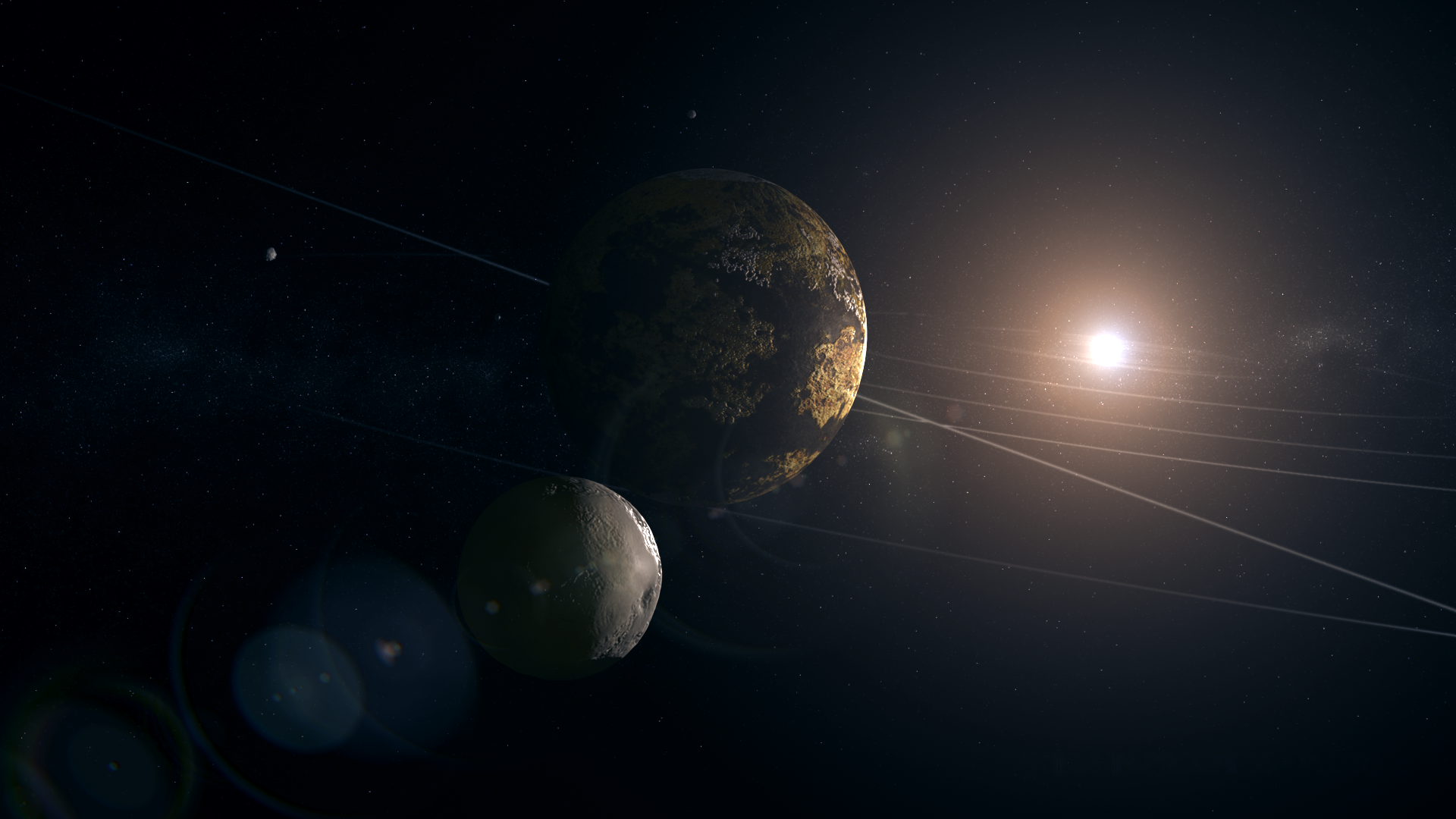
Directed the recreation of seven Kuiper Belt Objects from Tony Dunn’s data — digitally sculpted in ZBrush, then textured and rendered to a realistic finish based on planetary references.
Set the realistic “space” lighting and enforced physically correct staging — keeping the camera always facing the lit side of the planets.
Designed the camera language: carefully planned camera moves and Zdepth-driven fly-throughs between the Kuiper Belt Objects and their motion orbits, housed together inside the belt.
Owned look development, lighting, rendering, and final delivery — rendering 10,000+ frames on a 70–80-node farm over 5–6 days of total render time, and compositing in Adobe After Effects.
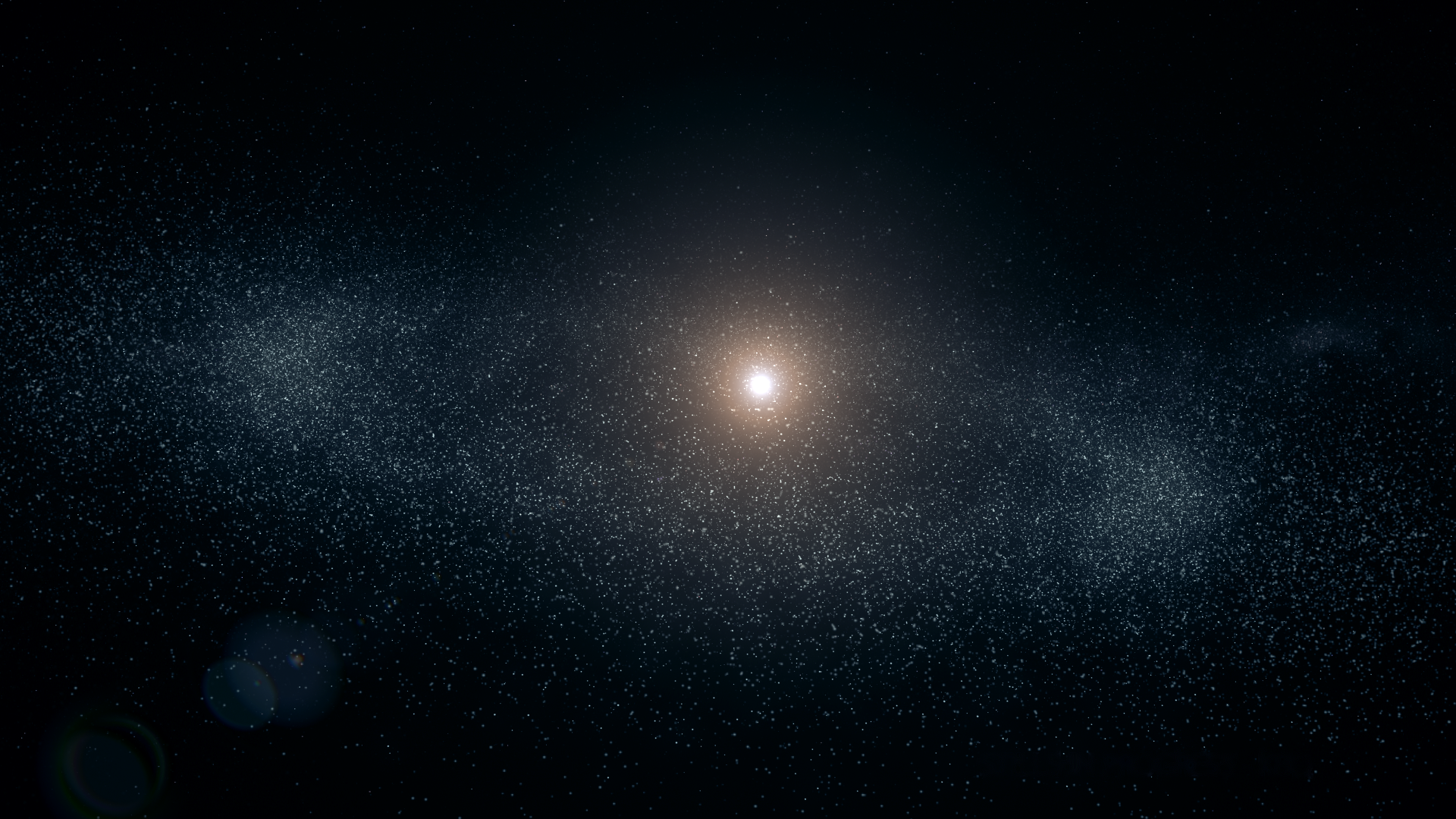
To build both regions volumetrically, we deployed nParticle systems in Autodesk Maya, translating the point-cloud data into large volumes of particles standing in for the icy bodies, dwarf planets, and comets — enough to hold the science’s object counts while keeping the belt and cloud readable, and efficient enough to render at the scale the sequence demanded. Alongside the volumetric fields, the team recreated seven individual Kuiper Belt Objects from Tony Dunn’s data — digitally sculpted in ZBrush, then textured and rendered to look realistic against other planetary references.
For the individual objects, I focused on realistic “space” lighting and kept the camera oriented toward the lit side of each planet. To show each body together with its orbit, I used carefully planned camera moves and Zdepth to build fly-throughs that travel between the Kuiper Belt Objects and their motion paths inside the belt.
The finished sequence ran more than 10,000 frames. Pixeldust relied on its render farm — 70 to 80 nodes on Intel i-7 processors with 12–16 GB of RAM — for a total of 5–6 days of render time, with final frames composited in Adobe After Effects. The result is a scientifically grounded, volumetric recreation of the Kuiper Belt and the Oort Cloud for NASA’s The Year of Pluto — two of the solar system’s most distant frontiers, rendered at true scale and paired with the lighting, camera work, and compositing craft that turns raw astronomical data into a compelling on-screen journey.